Tyler spent a Sunday night at the kitchen table writing five sentences about mowing grass. He wrote them three times. It was the last item on a fourteen-line checklist from the loan officer, and four days later, on Thursday, September 10, she called to say we were pre-approved.
It was the same loan officer we sat with in March, at the bank in town. This time we weren't just asking questions. Here's what she needed, what we didn't see coming and the number we got.
What they asked for
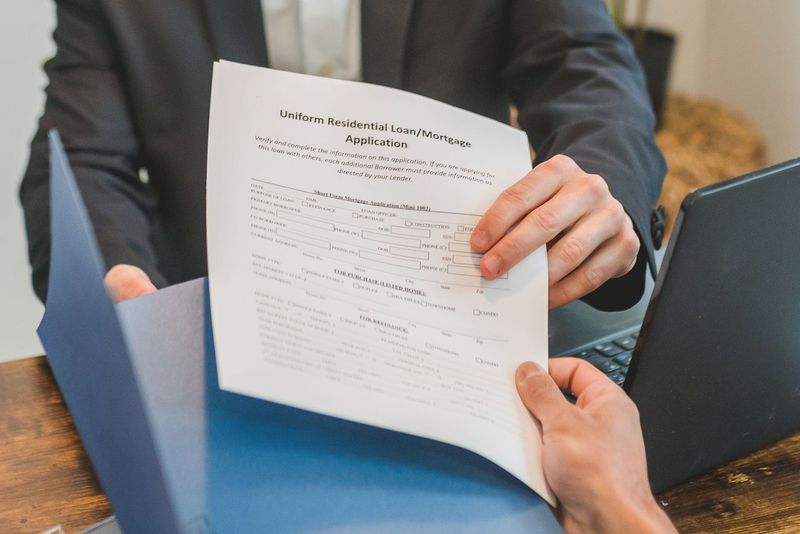
Fourteen lines boiled down to this:
- Pay stubs covering the last 30 days, for both of us
- W-2s for 2024 and 2025
- Our federal tax returns for 2024 and 2025, every page and every schedule
- Two months of statements for every account: checking, the house fund, the emergency fund and Tyler's 401(k)
- Photo IDs
- Permission to pull both of our credit reports
- A one-page rent history from our landlord
- A letter explaining the mowing money
Most of it was just downloading PDFs and uploading them to the bank's secure site. The rent history was Mr. Dale filling out a short form saying we've paid $725, and now $760, on time every month since January 2022. He filled it out in pencil, which felt right.
What surprised us
The mowing money didn't count. Tyler mows nine yards in the summer at $40 a week each, and I assumed that would help us qualify. It didn't. She explained that self-employment income generally needs about two years of history on your tax returns before a lender will count it, and Tyler's 2025 return is the first one with a Schedule C on it. So we were approved on our paychecks only. If we're still mowing next year, it might count then. For now, it's a bonus, not income.
It still had to be explained. Our July and August statements are full of deposits that aren't paychecks. Tyler's mowing money goes into the house fund every Sunday night, a few hundred dollars at a time. And after the $1,380 truck repair in July, the emergency fund shows a $1,380 withdrawal followed by our July and August transfers and $363.60 of mowing money going back in. On a bank statement, that looks like a lot of random deposits. She asked for a letter, and that's what Tyler's Sunday night was about: what he does, how many yards, what he charges, that it's reported on his 2025 tax return, and that it's seasonal. I attached the shop receipt for the truck, too. She said that was all she needed.
Every page means every page. Some of our statements have a last page that says it was left blank on purpose. She wanted those too, and she was nice about it the second time I forgot.
Our credit scores. Mine came back at 718 and Tyler's at 742. In March of last year, mine was 662. That's 56 points, mostly from paying off a credit card, keeping it at zero and paying every bill on time. I didn't expect to be this proud of a three-digit number.
What the bank statements had to show. The house fund was at $29,852.00 on the August statement, and the emergency fund was back to $3,000. She said the money for a down payment and closing costs needs to have been sitting in our own accounts for a while, and ours had been. That's one more reason I'm glad the house fund never paid for the truck. That $29,852.00 is still $5,148 short of our $35,000 goal, with four months to go.
The number we got
The letter says we're pre-approved for up to about $165,000. She ran it both as a USDA rural loan and as a conventional loan, and which one we use will depend on the actual house.
$165,000 is more than we want to spend. The estimate sheet she gave us showed a monthly payment around $1,300 at $165,000, with taxes, insurance and mortgage insurance folded in. At $145,000 it was around $1,150. Our rent is $760. We'd like to stay under $150,000, so the jump from rent to a mortgage payment is something we can absorb without giving up everything else that got us here.
The ceiling is not the plan. A lender tells you what you can borrow. Only we know what we want to pay every month for thirty years.
The letter is good for about 90 days, so if we haven't found a house by early December, we'll have to refresh it. I'm not a mortgage expert, so if you're getting ready for this, ask your own loan officer what she'll want from you. Ours made it easy, but the checklist was still fourteen lines long.
Now we start looking for real.