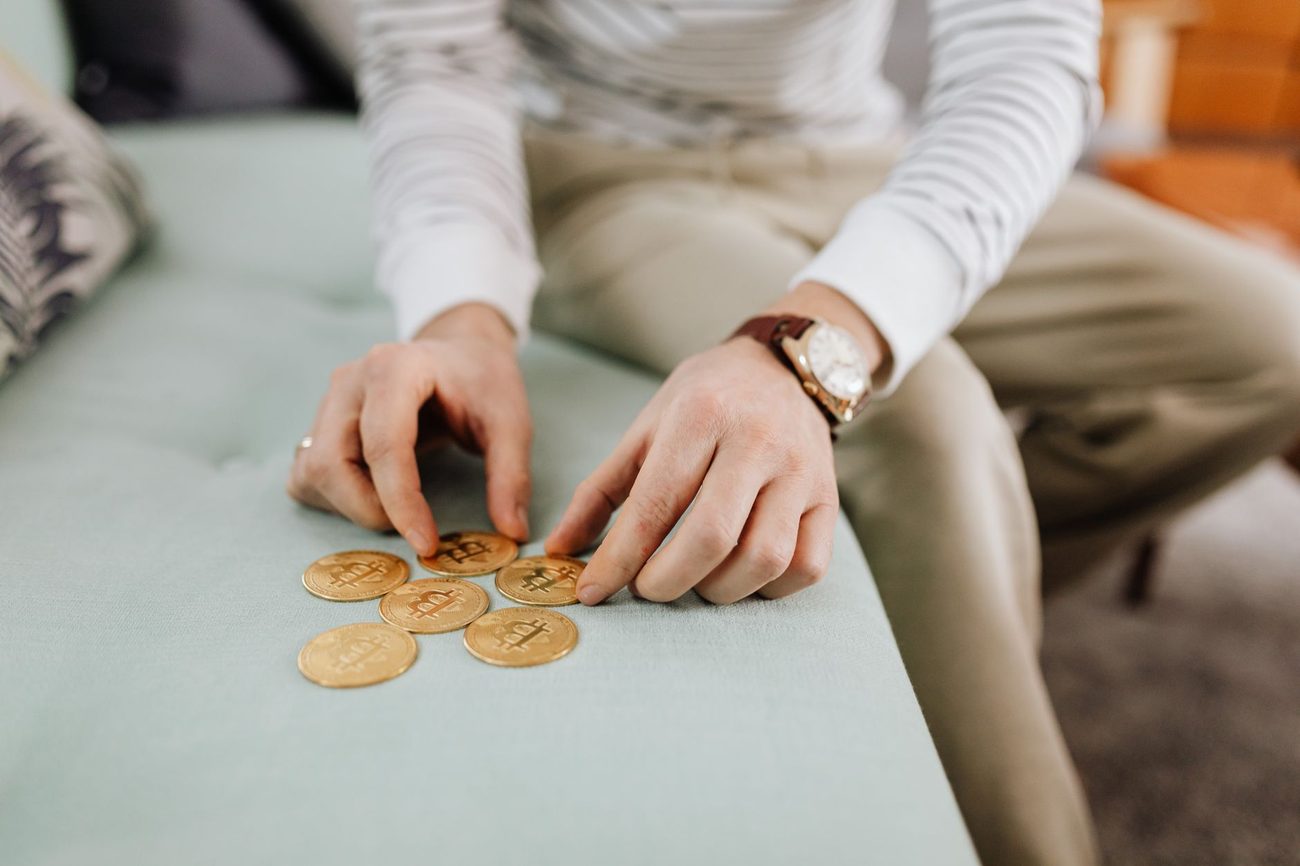
Friday night, Tyler spread an old bath towel over the kitchen table so the quarters wouldn't roll off onto the floor. Then he tipped the pickle jar over like he was dumping a bucket of bait at Long Branch Lake. Coins everywhere. Moose came running to see if any of it was food, sniffed a nickel, and went back to his bed disappointed.
It was our first count of the year. The last time we emptied the jar was right after Christmas, so this was about 21 weeks of loose change and $5 bills.
It took us about 40 minutes to sort and count, with the radio on and a bowl of popcorn between us. Here's what was in there.
| What | How many | Worth |
|---|---|---|
| $5 bills | 17 | $85.00 |
| Quarters | 312 | $78.00 |
| Dimes | 148 | $14.80 |
| Nickels | 106 | $5.30 |
| Pennies | 430 | $4.30 |
| Total | $187.40 |
What loose change really adds up to
$187.40 over 21 weeks is about $8.92 a week. If we keep that pace for a full year, the jar would give us around $464, since $8.92 times 52 weeks is $463.84.
That's real money. It's also less than one month of the $289 we now send to the house fund from my old car payment. I want to be honest about that, because I think jars get oversold. A jar on the counter is not going to buy anybody a house.
The interesting part was the fives. Seventeen $5 bills made up $85 of the total, which is about 45 percent. Without the $5 rule, this would have been a $102 jar, not a $187 jar. The coins are what make the noise, but the fives do a lot of the work.
Quarters were the other big piece. Most of those come from Tyler buying gas and a drink at Casey's with cash a couple of times a week. Pennies, on the other hand, were 430 coins for $4.30. They're heavy, they're slow to count, and Tyler suggested we start leaving them in the little tray by the register. I told him the jar takes everything. That's the rule, and the rule doesn't care how heavy they are.
Where we cash it in
This is the part I actually had to look into. There are coin-counting machines at some grocery stores, and they're easy, but they keep a fee for every dollar they count. The one I checked takes almost 12 cents of every dollar. On the $102.40 of coins in our jar, that would have been about $12.19 gone before we ever saw the money.
Some of those machines will skip the fee if you take the money as a store gift card instead of cash. That only helps if you were going to spend that exact amount at that exact store anyway, and the point of our jar is that it doesn't get spent.
So we take it to the bank in town where we have our checking and savings. They'll run loose coins through their counting machine for free for customers, as long as you don't show up with a bucket that splits open on the counter. Some banks want coins rolled in paper wrappers first. Ours doesn't, which I appreciate more than I can say after 40 minutes of sorting.
The bank is open until noon on Saturdays, so this morning I carried a heavy zip bag and an envelope of fives through the door, and the teller ran it all while I waited. The machine agreed with us to the penny: $187.40. It went straight into the house fund.
Where the house fund stands
With the jar money and Wednesday's $289 car payment transfer, the house fund is at $7,816.37. That's up from $4,200 on January 1, and it's the first time it has passed $7,800. Our goal is $25,000 by the end of next year, so there's a long way to go, but the line on the sheet only goes one direction.
And on Tuesday, our credit card gets its last payment. Ten weeks, $2,140, and then whatever's left in checking at the end of the month goes back to the house fund, starting in June. I'll write about that once it's officially zero.
The jar is back on the counter, empty except for the two quarters Tyler dropped in this morning to "get it started." It'll be full again before we know it, and I'll be right here to count it.