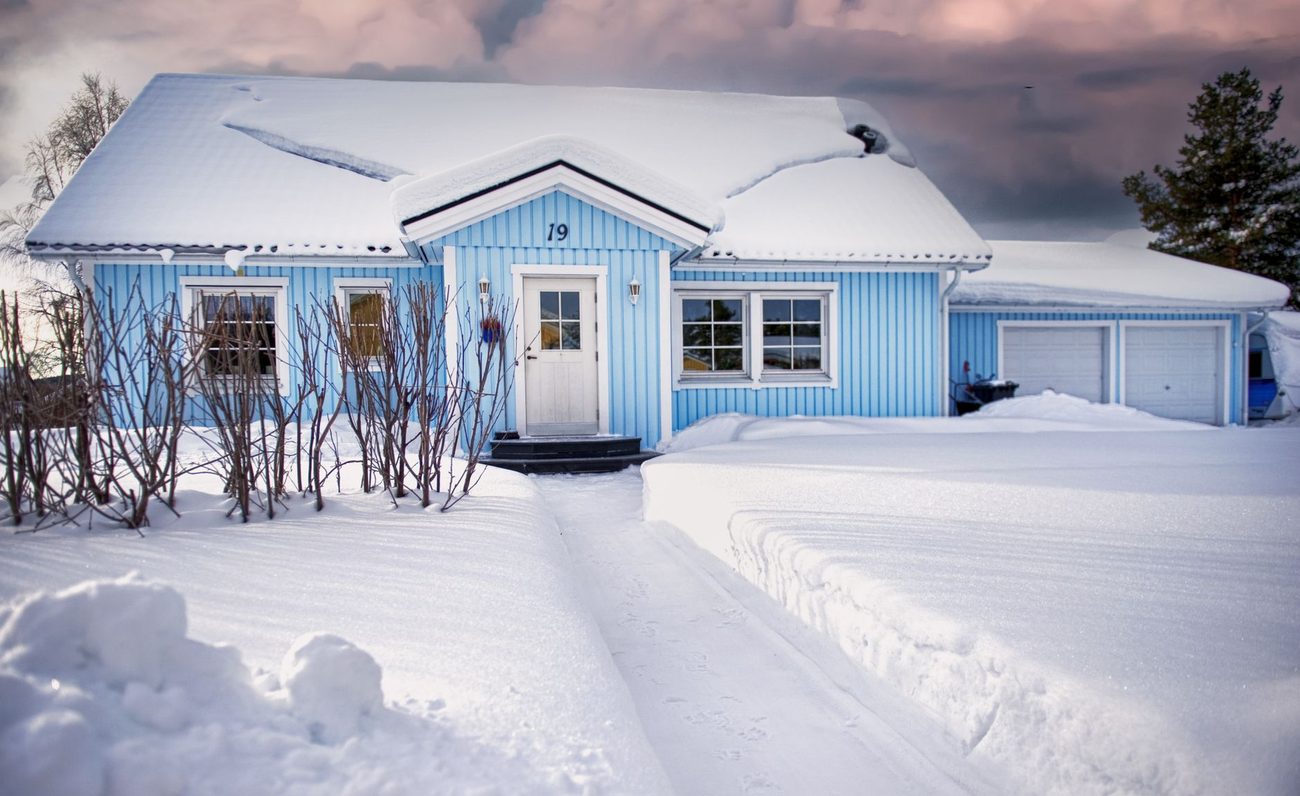
The thermometer stuck to our kitchen window said 3 degrees on the morning of January 21. The heat pump out back had been running all night, the house was 64 inside with the thermostat set at 68, and Moose was curled up on the couch under my good blanket, which he knows he isn't allowed on.
That week is why the electric bill that posted this morning is $246. It's the highest bill we've had since we moved into the duplex four years ago. The old record was $229, last February.
Our side of the duplex is all-electric: heat pump, water heater, stove. Mr. Dale put the heat pump in back in 2016. In Missouri you can't shop for a different electricity supplier, so when a bill like this comes, the only real question is what we used and why.
What happened that week
For about six days, the lows were in the single digits and the highs barely got out of the teens. A heat pump pulls heat out of the outside air, and when the outside air is 3 degrees, there isn't much left to pull. Ours ran and ran and couldn't keep up.
On the second cold morning, Tyler noticed the thermostat had a setting called EM HEAT. Emergency heat. It was 3 degrees outside, which felt like an emergency to both of us, so he switched it on. And it worked. Hot air came out of the vents for the first time in two days, and we left it there for four days.
Then Mr. Dale came by to check on Gloria's pipes next door and stuck his head in. He looked at the thermostat and shook his head. Emergency heat, he told us, is for when the outdoor unit is broken. It shuts the heat pump off and runs only the electric heat strips inside, which is like heating the house with a giant toaster. The air comes out hotter, but it takes a lot more electricity to make the same heat. A heat pump struggling at 3 degrees is still cheaper than the strips.
Reading the bill
The bill was 2,195 kilowatt-hours. Our winter rate, with all the charges added in, works out to about 10.8 cents each, plus the $9 customer charge we pay every month no matter what.
Our utility's website shows use day by day, so I went back and looked. On ordinary January days we used about 60 kilowatt-hours a day. During the cold snap, about 85. On the four days the thermostat sat on emergency heat, about 135. That's 50 extra a day for four days, 200 kilowatt-hours, or roughly $22.
So most of the $246 was the weather. About $22 of it was us.
The heat pump lesson, and a few others
Here's what we changed, and what we learned about keeping a small rental warm without paying for the heat twice:
- Emergency heat stays off unless the outdoor unit actually quits. If it does, we call Mr. Dale first.
- No big setbacks at night. We used to drop it to 62 at bedtime and bump it back to 68 at six. Mr. Dale said that morning jump is exactly when a heat pump turns on the heat strips to catch up. Now it sits at 66 day and night, and 65 while we're both at work.
- Keep the outdoor unit clear. Tyler shovels around it after a snow and knocks the ice off the top.
- Change the filter. Ours was gray and fuzzy. Mr. Dale changes them twice a year, but filters are $9, so now we swap our own every two months in winter.
- Plastic on the bedroom windows. A $22 window film kit for the two drafty ones. The door sweep Mr. Dale put on last summer is still doing its job on the back door.
We also talked about a space heater for the bedroom and decided against it. A plug-in heater works the same way as those heat strips, just smaller. It would make one room warm and the bill bigger.
Signing up for average billing
Last summer, after the $198 bill, I said I wanted to see the real number every month, and to ask me again in January. Well, here we are.
Our electric utility has an average-billing plan. They take the last 12 months of bills and divide by 12. Our last 12, counting this one, add up to $1,698. Divided by 12, that's $141.50. I called this morning, and starting with the March bill we'll pay $142 a month, adjusted now and then if our use changes. It doesn't save us one dollar over a year. But next January, when the cold comes back, the bill on the fridge will say $142, and that's a number I can plan around.